Nucleic acids are very large macromolecules composed of repetitive units of the same building blocks nucleotides similar to. There are prominently two types of nucleic acids known to us.
Chem4kids Com Biochemistry Nucleic Acids
If the sugar is the.

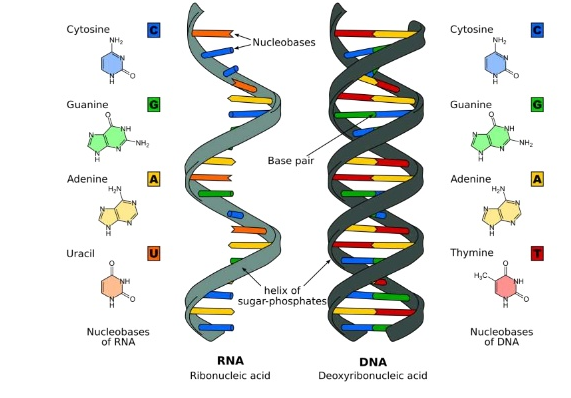
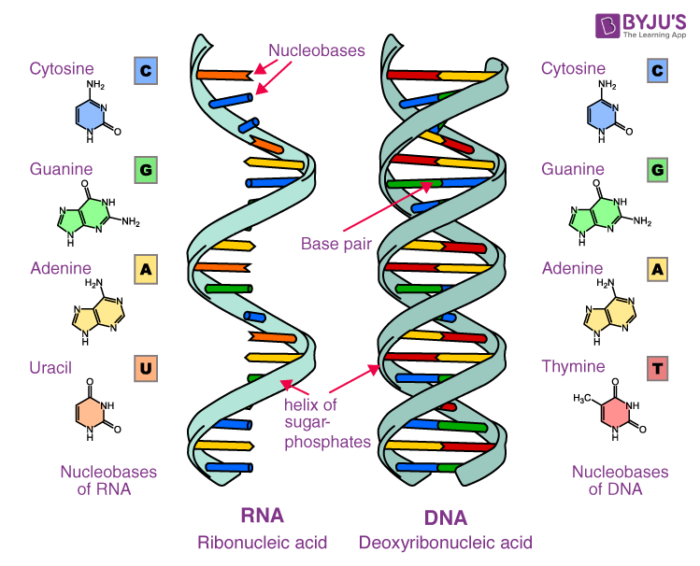
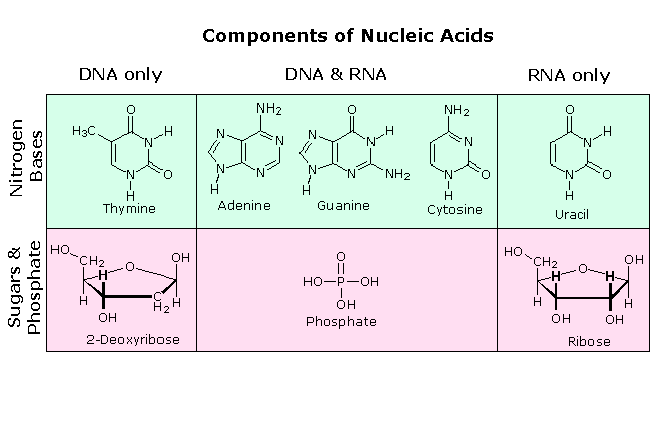
What are the elements present in nucleic acids. Nucleic acids contain the same elements as proteins. Carbon can be found in the sugar molecules that. T however is found only in DNA while U is found in RNA.
Nucleic acids are biopolymers or large biomolecules essential to all known forms of lifeThey are composed of nucleotides which are the monomers made of three components. They carry the genetic blueprint of a cell and carry instructions for the functioning of the cell. The addition of phosphorus makes nucleic acid different to other categories of biocompounds namely carbohydrates lipids and proteins.
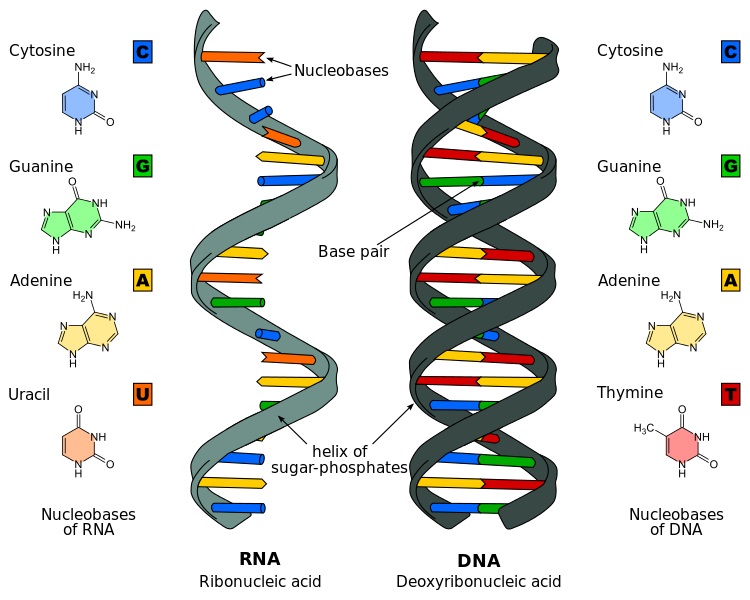
The two main types of nucleic acids are deoxyribonucleic acid DNA and ribonucleic acid RNA. The bases in nucleic acids are heterocyclic compounds containing nitrogen and carbon in their rings. Composed of single sugars called monosaccharides.
These molecules are composed of long strands of nucleotides. The nitrogenous bases are of two types. Nucleic acids include DNA and RNA.
In the nucleus nucleotide monomers are linked together comprising of distinct components namely a Phosphate Group Nitrogenous Bases or Ribose and Deoxyribose. All nucleic acids contain the bases A C and G. Phosphorus nitrogen oxygen carbon and hydrogen.
The nucleic acids are made out of five primary elements. Click to see full answer. Many composed of glycerol and three fatty acids.
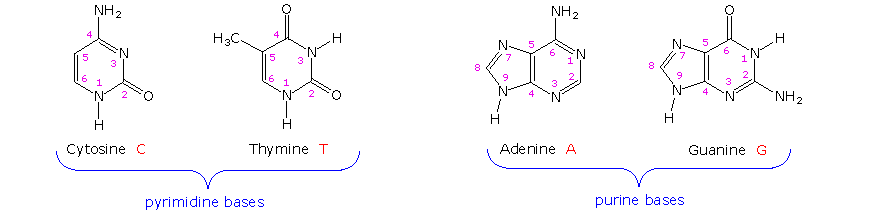
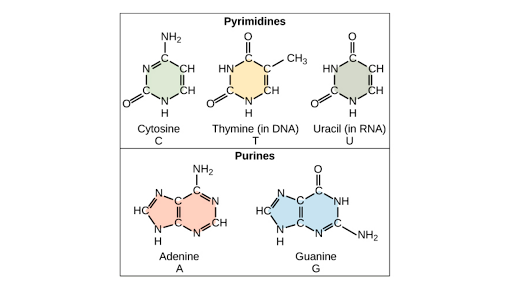
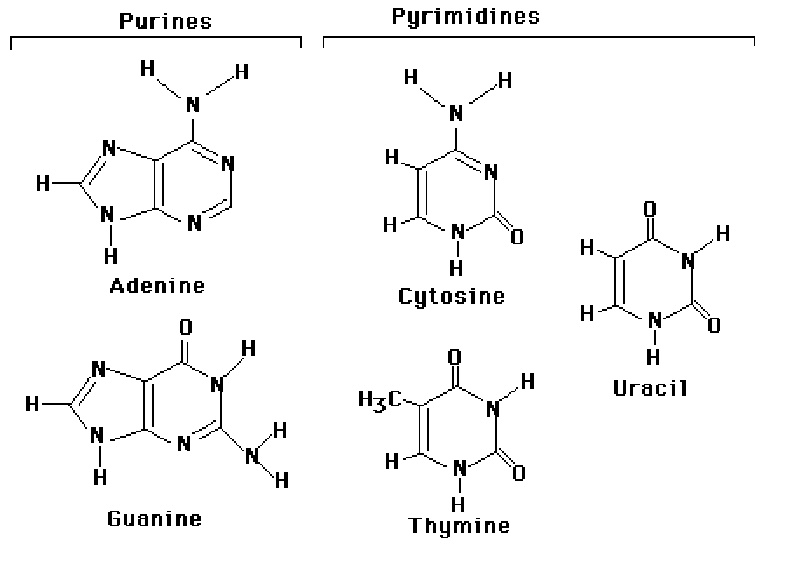
Adenine A guanine G cytosine C thymine T and uracil U. Examples include gluclose sucrose starch cellulose glycogen. Each nucleic acid contains four of five possible nitrogen-containing base s.
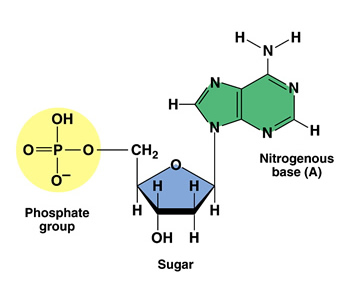
A 5-carbon sugar a phosphate group and a nitrogenous baseThe two main classes of nucleic acids are deoxyribonucleic acid DNA and ribonucleic acid RNA. Carbon hydrogen oxygen nitrogen and phosphorous. The five elements necessary to construct a nucleic acid chain are carbon hydrogen oxygen nitrogen and phosphorus.
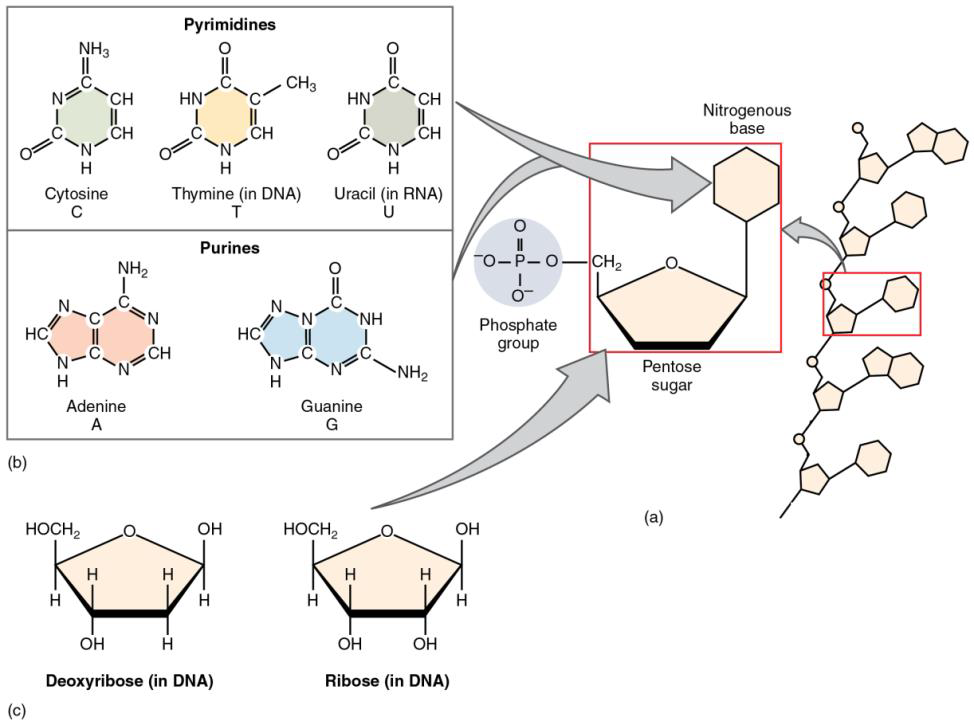
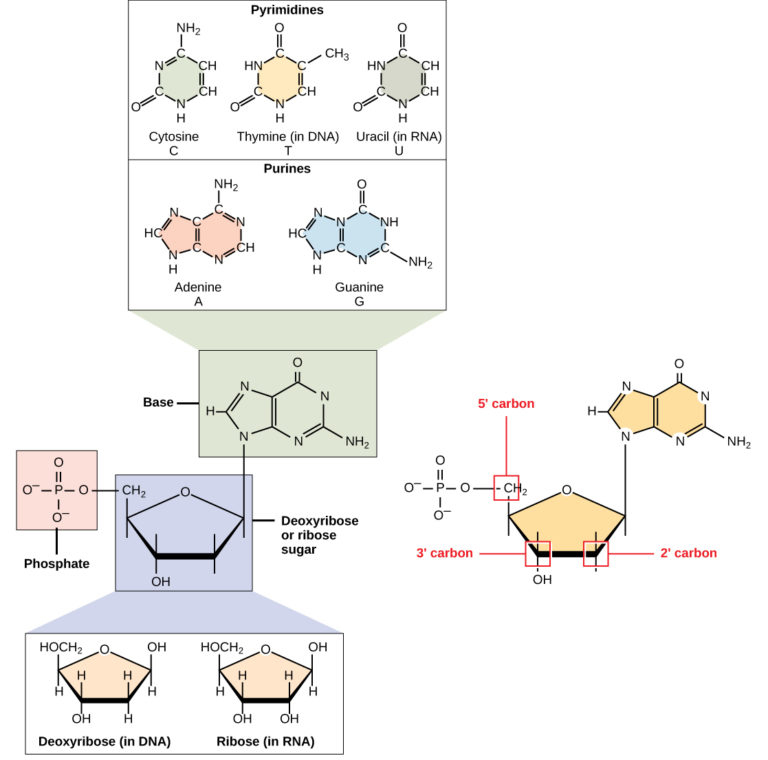
These components of nucleic acids are constructed from five elements. The phosphate groups allow the nucleotides to link together creating the sugar-phosphate backbone of the nucleic acid while the nitrogenous bases provide the letters of the genetic alphabet. How do these elements link together to create the nucleic acids and what functions do they have.
Deoxyribonucleic acid DNA and ribonucleic acid RNA are two major types of nucleic acids. Nucleotides are composed of a nitrogenous base a five-carbon sugar and a phosphate group. As we can see the nucleic acid building blocks of DNA and RNA are made up of carbon hydrogen oxygen nitrogen and phosphorous.
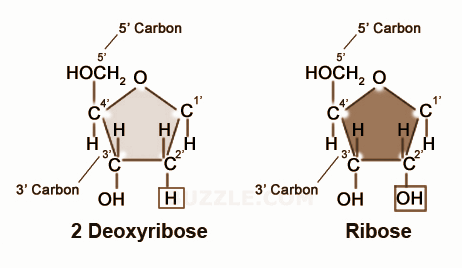
DNA is the genetic material found in all living organisms ranging from single-celled bacteria to. They carry the genetic blueprint of a cell and carry instructions for the functioning of the cell. If the sugar is ribose the polymer is RNA.
DNA and RNA are responsible for the inheritance and transmission of specific characteristics from one generation to the other. Carbon hydrogen oxygen nitrogen. The elements that are found in nucleic acids are carbon hydrogen nitrogen oxygen and phosphorus.
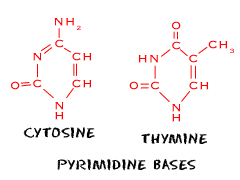
Nucleic acids comprise of DNA-deoxyribonucleic acid and RNA-ribonucleic acid that form the polymers of nucleotides. The two main types of nucleic acids are deoxyribonucleic acid DNA and ribonucleic acid RNA. A and G are categorized as purines and C T and U are collectively called pyrimidines.
The Elements of Nucleic acids function as the blueprints for life able to hold the genetic information that will be translated into proteins. Pyrimidines and Purines are two types of nitrogenous bases. Nucleotides consist of 3 components.
Carbon hydrogen oxygen nitrogen and phosphorous. The phosphate groups allow the nucleotides to link together creating the sugar-phosphate backbone of the nucleic acid while the nitrogenous bases provide the letters of the genetic alphabet. These components of nucleic acids are constructed from five elements.
Nitrogenous base Adenine Guanine Cytosine Thymine present in DNA only Uracil present in RNA only Adenine Guanine Cytosine Thymine present in DNA only Uracil present in RNA only 5-carbon sugar which is called deoxyribose found in DNA and ribose found in. DNA is composed of a phosphate-deoxyribose sugar backbone and the nitrogenous bases adenine A guanine G cytosine C and thymine T. DNA is the genetic material found in all living organisms ranging from single-celled bacteria to.
Actually there are three types of linkage are present in nucleic acids between nitrogenous basesthere is Hydrogen bond and in between ribose sugar and base glycosidic linkage and the last one is phosphodiester linkage which basically joins the monomeric unit of nucleic acid 34K views. Plus phosphorous C H O N and P.

Pin On Scienze
Nucleic Acids

Create A Concept Map Of Biomolecules Concept Map Biology Activity Biology Graphic Organizers
Nucleic Acids Article Khan Academy
3 6 Nucleic Acids Medicine Libretexts
Nucleic Acid

Pin On Macromolecules

Notes 2 3 Part 2 Nucleic Acids Proteins So Far We Ve Covered The Following Macromolecules Carbohydrates Lipids Let S Review Ppt Download
Identify The Three Subunits In Nucleic Acids Socratic
Identify The Three Subunits In Nucleic Acids Socratic
Nucleic Acids Definition Examples Functions Of Nucleic Acids
Nucleic Acids
Nucleic Acid Definition Function And Examples Biology Dictionary
Nucleic Acids Functions Information Rna Dna Structure
Structure Of Nucleic Acids Biology For Majors I

Pin On My Saves
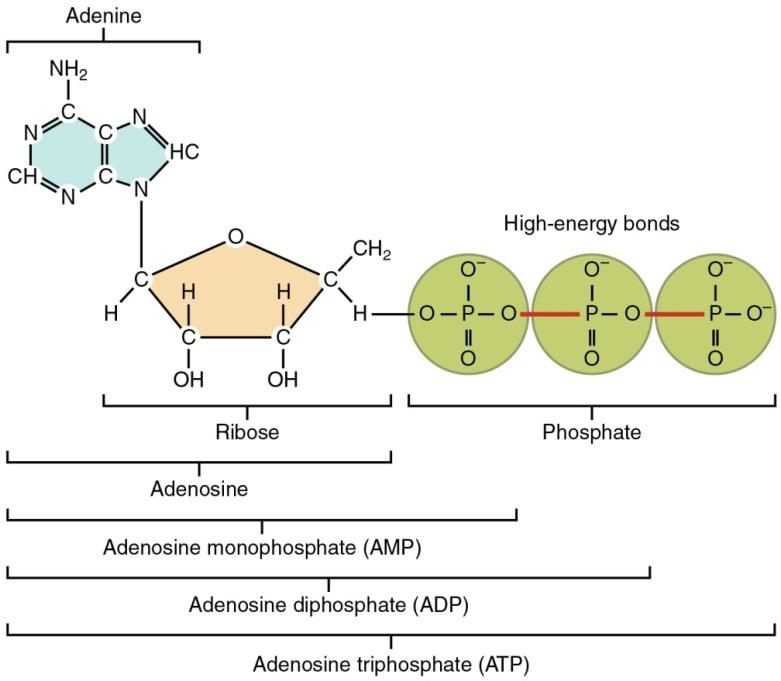
3 6 Nucleic Acids Medicine Libretexts
Pin On The Ingredients Of Life

Pin On Macromolecules

